Saint Lawrence Distributing Alms;
1447-1449, by Fra Angelico.
This past Sunday was the Feast of Saint Lawrence, third century deacon and martyr. The Gospel lesson was from John 12:24-26.
Wherever our Lord and Master is, that is where we want to be. Jesus graciously invites His servants to be where He is—not just in moments of comfort, but even on the road to the cross. The world promises ease and success, but through his gracious presence in Word and Sacrament, Christ delivers something better and eternal: forgiveness, life, and salvation. St. Lawrence of Rome knew this well, trading worldly treasures for the treasure of Christ, even unto death. Even though we may not live under the threat of death, we are still encouraged by Lawrence in his martyrdom, for through him we see God’s faithfulness in the midst of trial. Because Christ has conquered sin, death, and the devil for us, we are glad to be where our Master is, even if it means hardship or unpopularity. So we gather where He locates Himself for us: in Word and Sacrament. For wherever our Lord is, there is truly life, both now and forever. Listen to the entire sermon from Father Suelzle below.
On the Seventh Sunday after Trinity (Aug. 3), Father Leigeber preached on Christ’s miraculous feeding of the four thousand (Mark 8:1–9), reminding us that God alone provides our daily bread—both for this life and for the life to come.
The multitude in the Gospel lesson left everything behind to hear Jesus’ Word, going without food for three days. Their hunger for the Word of God outweighed their bodily needs—a striking example of the truth that “man does not live by bread alone, but by every word that proceeds from the mouth of God.”
Jesus, seeing their need, feeds them miraculously with seven loaves of bread and a few small fish—showing that God is the giver of all things, physical and spiritual. Father Leigeber reminded us that our meals, our homes, our families—everything—are gracious gifts from our heavenly Father. This is why Christians pause to pray before meals, following the example of Christ Himself.
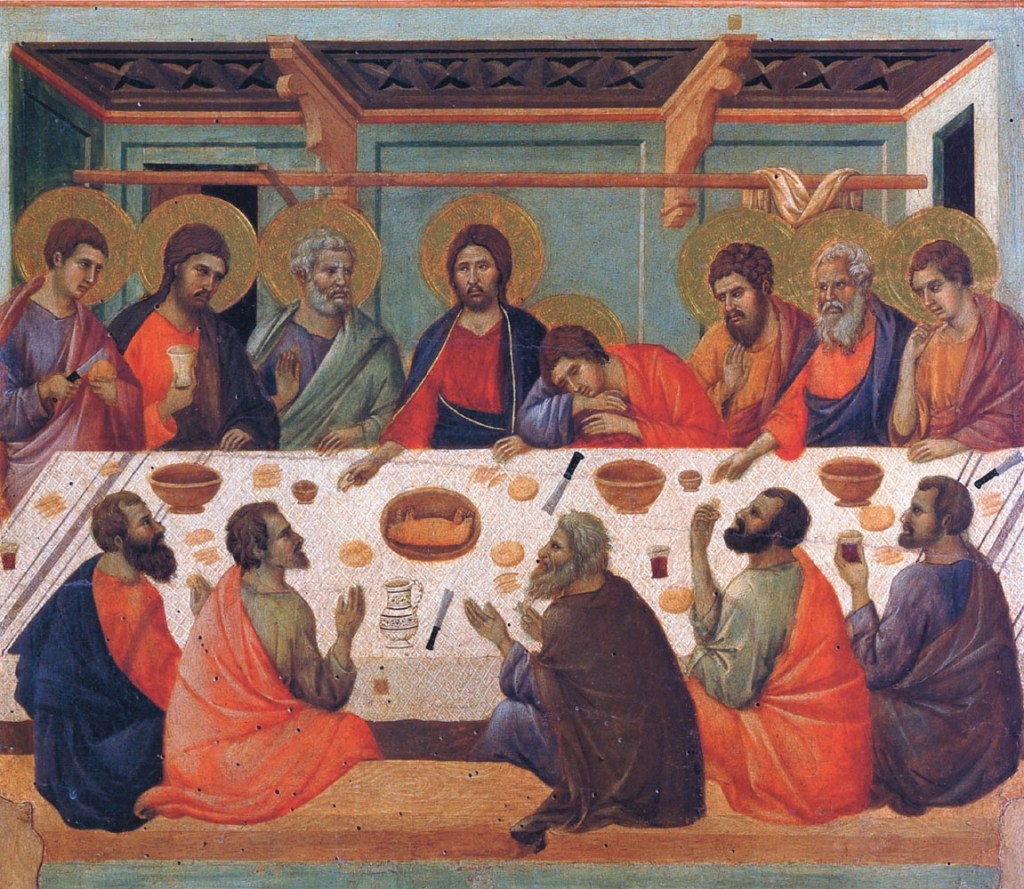
Yet the feeding miracle points beyond mere daily sustenance. The language of taking, blessing, breaking, and giving the bread to the disciples draws our attention to the Holy Eucharist, where Christ feeds His Church with His very Body and Blood. Just as He used the disciples to distribute bread to the people, so today He uses pastors to deliver His heavenly gifts in Word and Sacrament.
In a world of busyness and distraction, we are tempted to neglect this miraculous Meal. But Jesus’ compassion remains. Even if we’ve been forgetful or careless, He still offers Himself to us. Every Sunday, Christ performs a miracle—nourishing and sustaining His people with the Bread of Life, for the strengthening of faith and the hope of resurrection.
Let us never forget the Source of all good things. And let us give thanks, both at our tables and at His altar: “O give thanks unto the Lord, for He is good, and His mercy endures forever.”
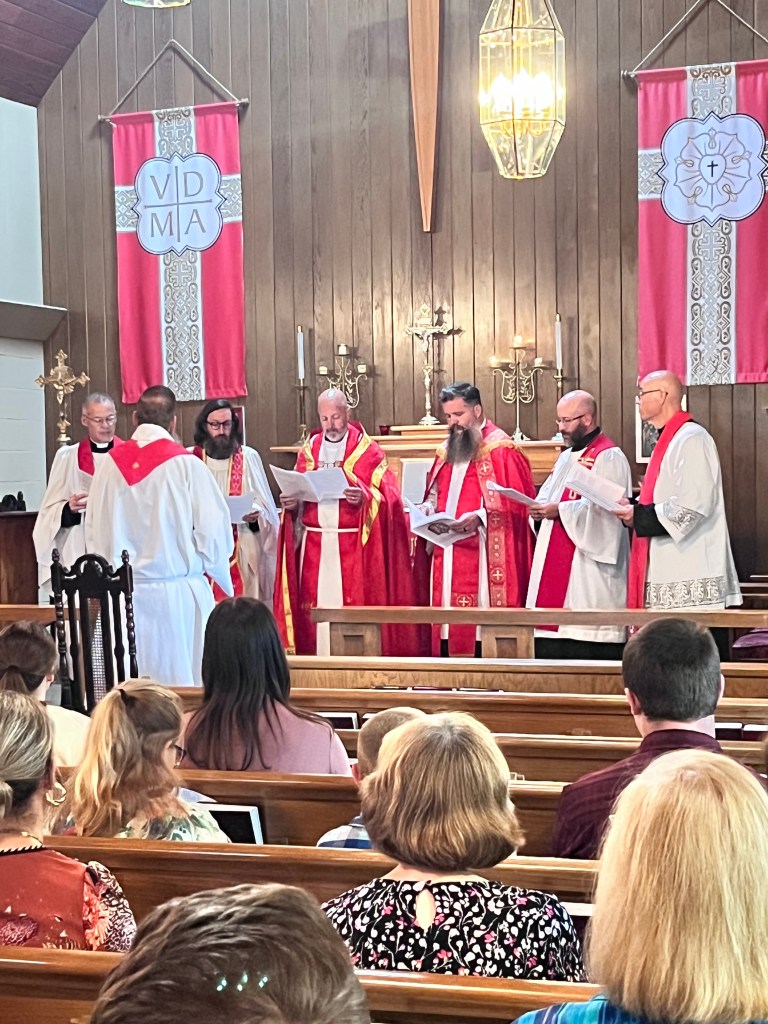
On Sunday evening, August 3, 2025, the people of All Saints Parish in Jonesboro gave thanks to God for the installation of The Rev. Fr. Daniel Paul Suelzle. The rite of installation, led by Fr. Joshua Willadsen (Auxiliary Bishop / Vice-President of the LCMS Mid-South District), was joyfully conducted within a service of choral Evening Prayer.
We were blessed to welcome guests from our sister congregations, including First Lutheran Church in Blytheville, Zion Lutheran Church in Waldenburg, and the pastors of Our Shepherd Lutheran Church in Searcy and of Hope / Shepherd of the Hills Lutheran Churches in Batesville / Horseshoe Bend. With the saints gathered and the Word richly proclaimed, it was a joyful evening of worship, fellowship, and mission-minded encouragement.
During the service, Fr. Leigeber preached a sermon that captured the heart of the Church Militant’s calling in northeast Arkansas:
“The devil and his minions are on their heels and we’re going to keep pushing forward… The Church Militant in northeast Arkansas is armed and ready and continues to fight, praise God!
“Christ, our Lord and King, has already won the war and defeated sin, death, and the power of the devil with His own blood and with the weapons of his cross and empty tomb. This is why we preach Christ crucified, as Saint Paul entreats us. It is the power of God. It is through the preaching of the Crucified One and through the delivery of His grace in the holy sacraments that the hordes of hell continue to be sent reeling.
…Christ Jesus, working through His Church—and particularly through his called and ordained servants—got to you when you were still behind enemy lines. And through the Sacrament of Holy Baptism and the preaching of the Gospel, He exorcised you, cast the devil out, delivered you from the bonds of hell…
So, Father Suelzle, you have been called to faithfully preach and teach and administer the sacraments in this parish… fighting to protect the saved and fighting to set free the souls of the lost and enslaved.”
Fr. Suelzle’s installation marks an important new chapter not only for All Saints Lutheran Church, but for the broader All Saints Cathedral Parish—a regional collaboration among All Saints Jonesboro, Zion Waldenburg, and First Blytheville. Together, we continue to build up the Church in northeast Arkansas through Word and Sacrament, traditional and Christ-centered education at All Saints Classical Lutheran School, and soon, God-willing, the launch of All Saints Music Conservatory.
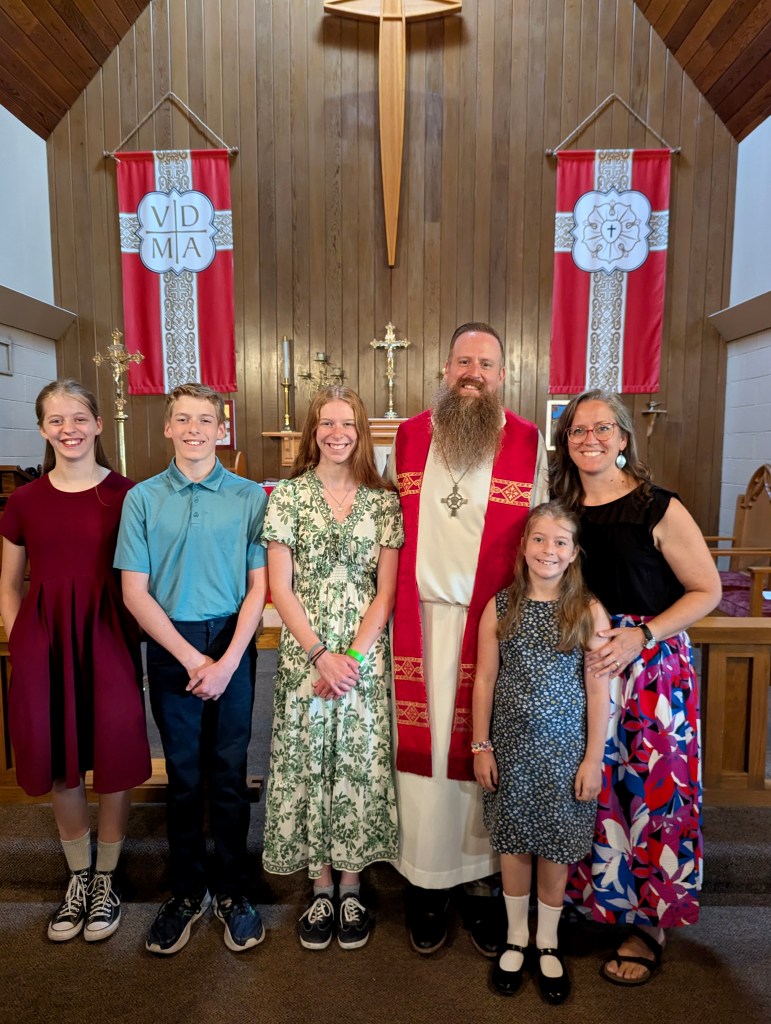
As we continue the good fight of faith, we give thanks to God for calling Fr. Suelzle to serve the saints in our northeast Arkansas communities. We look forward to the faithful shepherding, teaching, and leadership Fr. Suelzle will bring to our parish family. We also give thanks for his wife Mary and their children—Norah, Ephraim, Miriam, and Adelaide—and we pray they quickly and easily find joy, peace, and fellowship among us.
“Blessed is that servant whom his master will find so doing when he comes.” (Luke 12:43)




 All Saints Lutheran Church and School