Fasting in Lent: A Guide

What follows is a guide for God’s people at All Saints, and for others who might find it useful.

This post is part of a new “Why We Do What We Do” series, explaining the biblical and historic practices of the Church.
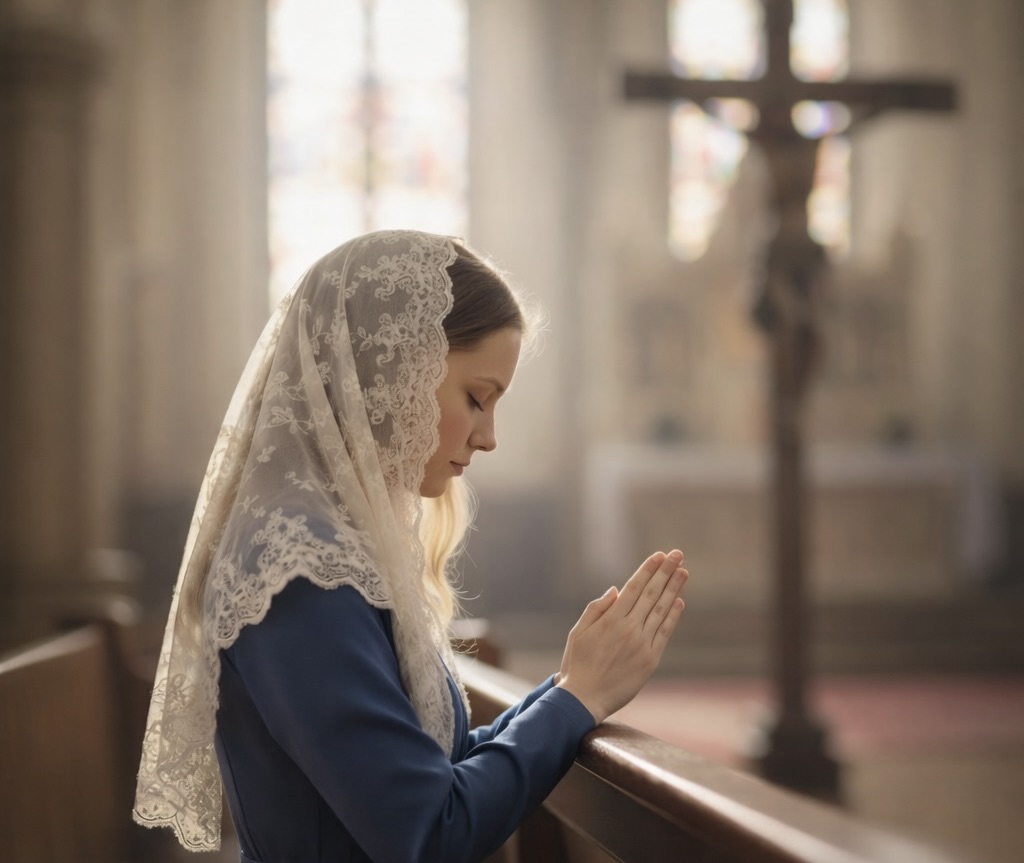
For many centuries, Christians have observed Lent as a season of repentance, prayer, and renewal. One of the ancient practices associated with this season is fasting. In recent years, All Saints has been recovering this discipline—not as a burden, but as a gift. As we approach Lent, it is helpful to consider what fasting is, why Christians have practiced it, and how it may be undertaken faithfully in the freedom of the Gospel.

The Scriptural Foundation

Fasting appears throughout Holy Scripture. Moses fasted on Mount Sinai (Exodus 34). David fasted in repentance (Psalm 35). The prophet Joel called Israel to “return to the Lord” with fasting (Joel 2:12). Our Lord Jesus Himself fasted for forty days in the wilderness (Matthew 4), and He assumed that His disciples would fast: “When you fast…” (Matthew 6:16), not “if.”

In the Book of Acts, the early Church fasted in times of prayer and discernment (Acts 13:2–3). Fasting, then, is not a medieval invention, nor a foreign custom. It belongs to the biblical life of God’s people.

Fasting and the Gospel

As Lutheran Christians, we are careful to confess that fasting does not earn God’s favor. It does not forgive sins. It does not make us more worthy of salvation. There is only one sacrifice for sin: the atoning death of Jesus Christ on the cross. Any attempt to use fasting as payment for sin turns it into a false work and robs Christ of His glory.

For this reason, Scripture and the Confessions place no binding laws on how Christians must fast. Practices have differed across centuries and cultures. As St. Irenaeus observed long ago, “differences in fasting do not destroy the unity of faith.” We fast, not by compulsion, but in freedom.

What Is Fasting?

Fasting and abstinence are related but distinct.

To fast is to eat less—to experience hunger.

To abstain is to refrain from certain foods, such as meat or rich foods.

The traditional fast of the Western Church was 1/4 meal for breakfast and lunch and a simple evening meal. Abstinence—especially from meat—was commonly practiced on Fridays.

The specific form of fasting may vary according to health, age, vocation, and circumstance. The goal is not to imitate a particular rule, but to practice moderation and self-discipline before God.

Why Do We Fast?

Our Small Catechism teaches that bodily discipline is “a fine outward training.” Fasting trains the Christian body and soul.

First, fasting teaches self-control. St. Paul writes that he disciplines his body lest he become disqualified (1 Corinthians 9:27). In a culture of constant indulgence, fasting reminds us that we are not slaves to appetite. Second, fasting deepens repentance. Hunger humbles us. It reminds us of our weakness and our dependence on God’s mercy. Third, fasting strengthens prayer. When we deny ourselves food, we become more attentive to our need for God. Physical hunger points us to a deeper hunger: “My soul thirsts for God” (Psalm 42:2). Fourth, fasting cultivates compassion. Going hungry in small measure unites us with those who lack daily bread. What we save through simpler living can be given to those in need.

Fasting, Prayer, and Almsgiving

Traditionally, fasting has never stood alone. It belongs with prayer and almsgiving—the three classic Lenten disciplines. By eating less, we often gain more time for prayer and Scripture. By spending less on food, we gain more resources for charity. Thus Lent becomes not a season of grim self-denial, but of renewed devotion and generosity.

How Might We Practice Fasting?

Each Christian should approach fasting thoughtfully and prayerfully. Some possibilities include:

• Eating smaller or simpler meals during Lent

• Abstaining from meat on Fridays

• Giving up rich foods, snacks, or alcohol

• Observing partial fasts on certain days

• Limiting eating between meals

Those with medical needs, demanding vocations, or other limitations should not burden their consciences. God desires mercy, not harm.

Begin modestly. Choose a discipline that is realistic. Pair it with prayer.

The True Purpose

Fasting is not about self-improvement. It is about re-centering our lives on Christ. By loosening our grip on earthly comforts, we learn again that “man does not live by bread alone, but by every word that proceeds from the mouth of God” (Matthew 4:4).

In the freedom of the Gospel, we discipline our flesh, strengthen our faith, and prepare our hearts to walk with Christ to the cross—and then to rejoice in His resurrection. May this coming Lenten season be for us a joyful time of repentance, renewal, and deeper trust in our gracious Lord.


Series: Why We Do What We Do

Understanding the theology, Scripture, and historic practice of Christian worship at All Saints.
In This Series:

The Centerpiece of Our Life

This post is part of a new “Why We Do What We Do” series, explaining the biblical and historic practices of the Church.

“All of life flows out of and back to the Divine Service.”

It is a simple saying, but it expresses something profoundly important about the Christian life.

The Divine Service as the Center of the Christian Life

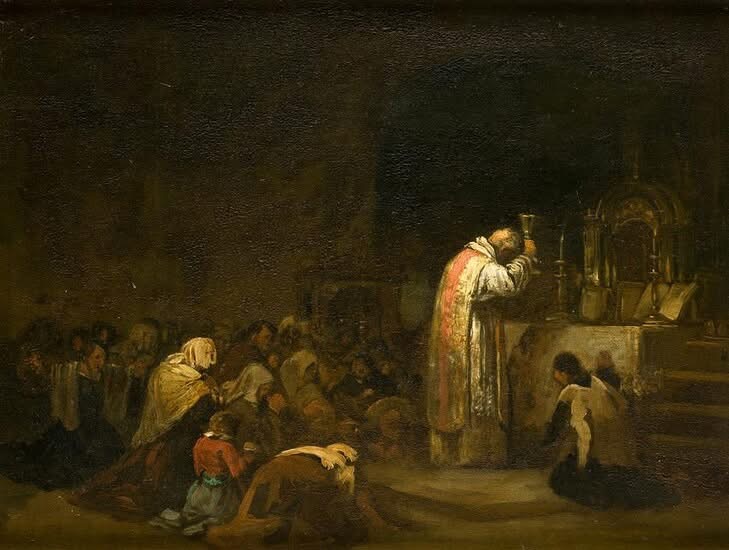
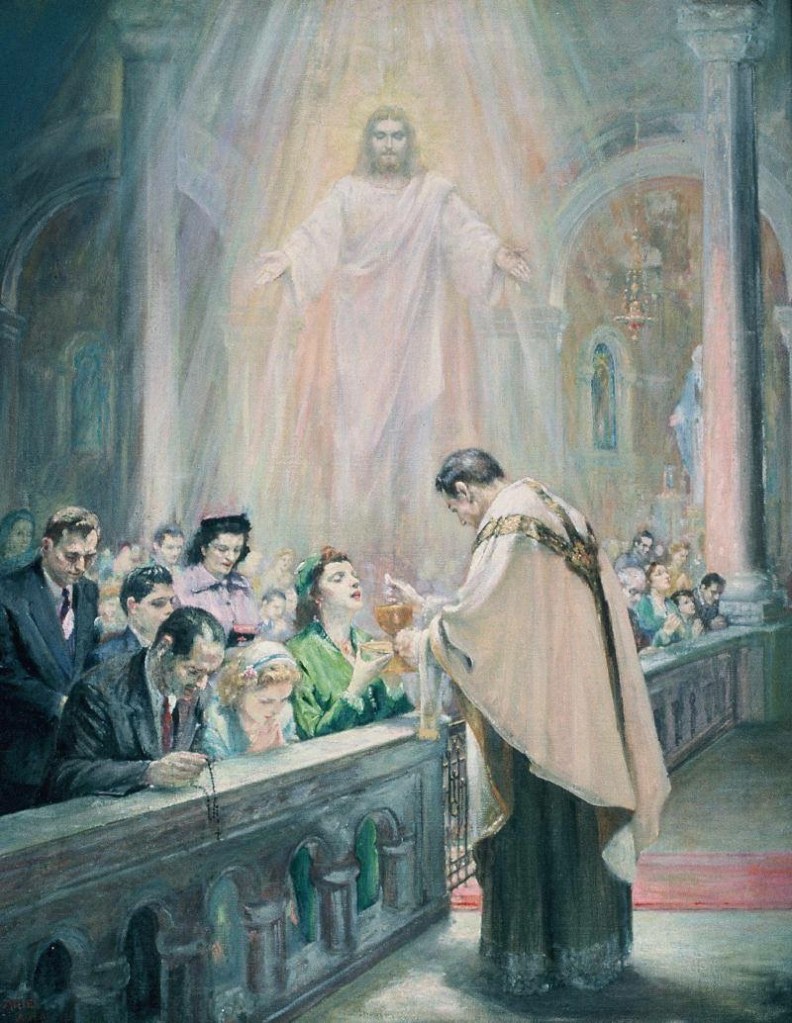
The Divine Service is not one activity among many in a Christian’s week. It is the centerpiece. There, Christ Himself serves His Church by giving His gifts—His Word of forgiveness, the salvation He accomplished on the cross, and His true Body and Blood for the life of the world.

Everything else in the Christian life flows from this reality. Our prayer, our vocation, our good works, our endurance in suffering, and our love for neighbor all flow out of what Christ gives us in the Divine Service. And everything else ultimately returns to it, as God gathers His people again and again to receive His gifts anew. The Divine Service is not primarily about our offering something to God, but about God giving Himself to us in mercy.

Faith as a Gift, Ongoingly Given and Received

Christians once understood this instinctively. Weekly attendance at the Divine Service was simply assumed. Over the past century—and even more so in the last twenty years—that assumption has steadily eroded. Today, even serious and sincere Christians often think of church attendance as something that happens once or twice a month rather than weekly.

What has been lost is not merely a godly habit, but a way of understanding how faith itself works. Holy Scripture reminds us that we are not the authors of our own faith, nor do we sustain or perfect it. Christ is “the author and finisher of our faith” (Hebrews 12:2). Faith is not something we generate from within ourselves; it is a gift continually given by God through the Holy Spirit, who creates and sustains faith through the hearing of the Word of Christ.

When Christians absent themselves from that Word and from the Sacrament, they are not simply taking a neutral pause. Faith is not stored up in advance. It must be received again and again from the Lord who delights to give it.

Strengthened or Eroded: There Is No Neutral Ground

The Scriptures are clear-eyed about the reality of spiritual warfare. The devil prowls around like a roaring lion, seeking someone to devour (1 Peter 5:8). Our struggle is not against flesh and blood, but against the spiritual forces of evil in the heavenly places (Ephesians 6:12). There is no neutral ground.

Either we are being strengthened and sustained by God through His gifts, or our faith is being slowly eroded away by the world, the flesh, and the devil. We are not strong enough to fend these enemies off on our own. As Blessed Martin Luther once remarked, if we could see how many fiery darts the devil is constantly shooting at us, we would run to the Sacrament of the Altar every chance we get.

Yet how easily we begin to think we can manage just fine without the Lord’s gifts for a week—or two—or more. In doing so, we underestimate both the seriousness of the battle and the generosity of the God who has provided exactly what we need.

Not Obligation, but Joy and Protection

Christians do not attend the Divine Service because they have to. They attend because it is a joy. It is the joy of children who hear their Father’s voice. It is the joy of sinners who receive forgiveness. It is the joy of being fed at the Lord’s Table with the very Body and Blood of Christ, given and shed for us.

God gathers His children for our good and for our protection. That is why attendance at the Divine Service should be an automatic assumption of the Christian life. It should never be a question of whether we are going to church this week. As soon as it becomes a decision we weigh and debate, the devil has already begun to gain a foothold.

Those who treasure God’s grace and mercy should miss the Divine Service only in cases of genuine emergency or when work or road conditions truly make attendance impossible. And even then, Christians should seek out other opportunities during the week to receive the Lord’s gifts—such as Wednesday Divine Service or Evening Prayer.

God has given His Church an immeasurable blessing in the Divine Service. He has given His children the Means of Grace—and pastors to distribute them—so that faith may be created, sustained, and strengthened until the end. In these gifts, Christ Himself is at work for us.

So let us rejoice in what God so freely gives, and let us remember this simple truth:

All of life flows out of and back to the Divine Service.


Series: Why We Do What We Do

Understanding the theology, Scripture, and historic practice of Christian worship at All Saints.
In This Series:

Why the Church Uses Incense

This post is part of a new “Why We Do What We Do” series, explaining the biblical and historic practices of the Church.

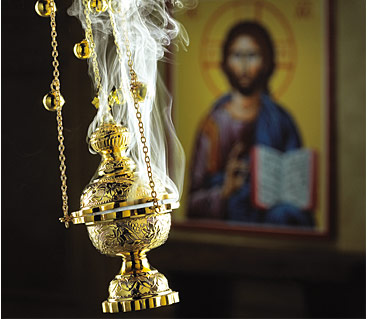
THE CHURCH HAS RECEIVED THE USE OF INCENSE as part of her worship from the beginning of her life. Long before denominational divisions, long before the modern suspicion of ceremony, the Church prayed, sang, and offered her worship with incense, according to the pattern given in Holy Scripture and received in faithful continuity from generation to generation.

The Church that confesses the Book of Concord stands within this same inheritance. She does not imagine herself a new church, nor as a departure from the ancient Church, but as the catholic Church reformed and restored by the Word of God—teaching nothing new and retaining everything that serves the proclamation of Christ and the faithful administration of His gifts. For this reason, Lutheran worship has always been marked by reverence, continuity, and catholic fullness.

Incense, then, is not an innovation, nor a borrowed custom, nor a matter of taste. It is a visible confession of what the Church believes about prayer, sacrifice, and the presence of Christ among His people. To understand its use, we begin where the Church must always begin: with the Holy Scriptures.

Incense in Holy Scripture

The Scriptures themselves give clear testimony to the meaning and use of incense in the worship of God.

The psalmist prays:

“Let my prayer rise before You as incense, the lifting up of my hands as the evening sacrifice.” (Psalm 141:2)

Here incense is explicitly connected with prayer—visible, tangible, and rising heavenward toward God.

The Book of Revelation reveals the same heavenly reality:

“Another angel came and stood at the altar with a golden censer, and he was given much incense to offer with the prayers of all the saints on the golden altar before the throne, and the smoke of the incense, with the prayers of the saints, rose before God.” (Revelation 8:3–4)

When the Church uses incense, she does not invent a symbol; she participates in the worship of heaven itself. Incense proclaims that the prayers of the saints are heard, received, and presented before God through Christ.

Incense and the Atonement

Incense is also bound to the atoning work of God. On the Day of Atonement, the Lord commanded Aaron the high priest:

“He shall take a censer full of coals of fire from the altar before the Lord, and two handfuls of sweet incense beaten small, and bring it inside the veil… that the cloud of the incense may cover the mercy seat.” (Leviticus 16:12–13)

The cloud of incense covered the mercy seat—the place where blood was shed for the forgiveness of sins. In this way, incense points to Christ Himself, who is our mercy seat, whose sacrifice is a sweet-smelling aroma before the Father, covering our sin and reconciling us to God.

The prophet Malachi looks forward to the Church’s worship extending throughout the world:

“From the rising of the sun to its setting my name will be great among the nations, and in every place incense will be offered to my name, and a pure offering.” (Malachi 1:11)

This is not a prophecy of the old temple cult, but of the Church’s universal worship—Christ-centered, sacramental, and offered among all nations.

Even at our Lord’s Epiphany, incense appears:

“They offered Him gifts, gold and frankincense and myrrh.” (Matthew 2:11)

Frankincense is a priestly gift, confessing that the Child is not only King, but God in the flesh, worthy of worship.

The Church’s Practice

For these reasons, the Church has always understood incense as a confession of faith, not an ornament or aesthetic flourish. It confesses that Christ is present among His people, that prayers are truly offered and heard, that worship is not merely earthly but heavenly, and that the Church stands in continuity with the saints who have gone before.

When the Church uses incense, she is not becoming something new. She is being what she has always been.

And when Lutheran congregations use incense, they are not borrowing from Rome. They are simply living as what they confess themselves to be: catholic Christians, gathered around Christ, receiving His gifts, and worshiping according to the Scriptures and the historic faith of the Church.


Series: Why We Do What We Do

Understanding the theology, Scripture, and historic practice of Christian worship at All Saints.

In This Series: