
Saint of the Day

Christmas Mass During the Day

A homily for the Nativity of our Lord, by Fr. Josh Leigeber.
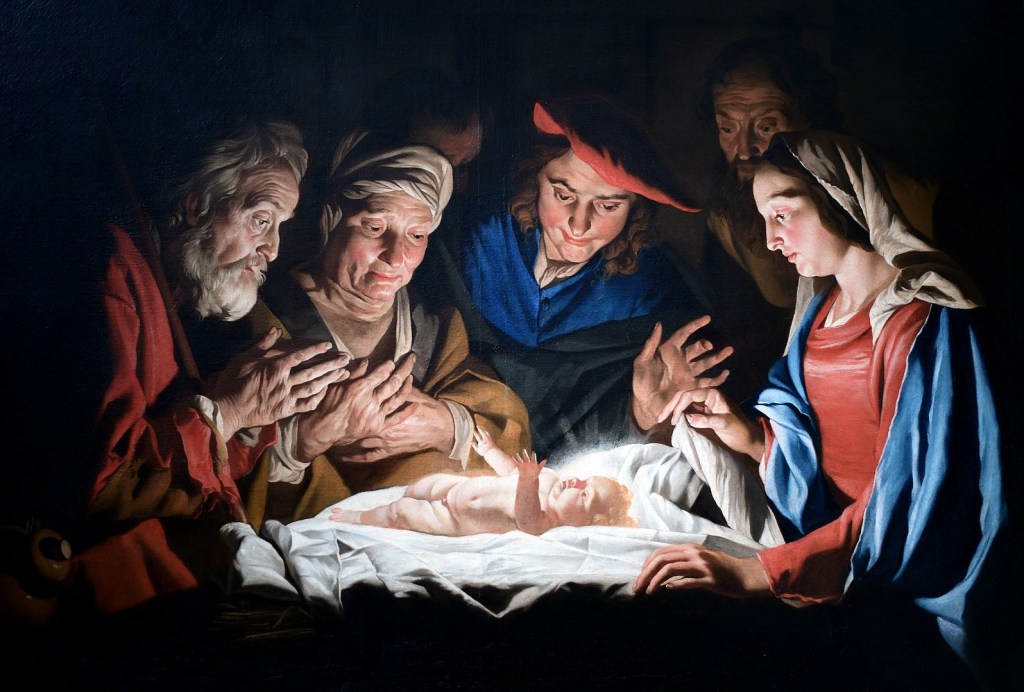
Adoration of the Shepherds by Matthias Stom (c. 1650). Palazzo Madama and Casaforte degli Acaj, Turin, Italy

Humanity was created to live in the light and life of God, yet through the rejection of God’s Word fell into darkness—sin, death, and separation from the Creator. This darkness was not merely moral failure, but blindness, leaving mankind unable to see God or return to the light by its own effort. Though God never ceased to speak, sin clouded human understanding and left the world under the shadow of death.

Into this darkness, God acted in immeasurable love. The eternal Word of God, through whom all things were made, became flesh and entered the fallen world. The Light that first gave life to creation came not with earthly power, but in humility, born as a helpless child. In this hidden way, the Light broke into the darkness and overcame it from within.

In Christ is life, and that life is the light of men. By entering humanity’s darkness, Christ takes upon Himself the death caused by sin and gives in exchange His own light and life. What was lost in the fall begins to be restored as God dwells with man once more.

As Christ is born into the world, those born into darkness are given new birth through Him—born of God by water and the Spirit. The Light has come. Sin, death, and the devil are put to flight. In Christ alone is life, salvation, and the true light that enlightens the world. Listen to the full homily below.
Christmas Mass During the Night

A homily for the Nativity of Our Lord, by Fr. Dan Suelzle.

In the blessed incarnation of Jesus Christ we behold the “Great Mystery” of God shattering human expectations. He condescends to his creation in humility to conquer the great enemies of sin, death, and the devil. Though all things exist on account of this Word, Christ’s humble arrival in a manger—fulfilling ancient prophecies through a virgin birth—highlights a divine reversal, where the King of Kings dwells among and for the weak and the unworthy. This act of condescension is not merely a sentimental event but part of a God’s merciful and redemptive work that stretches all the way back to the Garden of Eden. The infant God first laid in a feeding trough was destined for the cross to accomplish the forgiveness of sins for all mankind. This great mystery continues to be revealed to the faithful today, inviting us to move from the manger to the cross and empty tomb and finally to the Altar, where the same Lord who was born for us, also feeds us with his life-giving body and blood for our forgiveness. Listen to the entire homily below.

Whatsoever Is Hindered by Our Sins

A sermon for the Fourth Sunday in Advent, by Fr. Josh Leigeber.

On the Fourth Sunday in Advent—anciently known as the Preparation—the Church prays a striking petition: that the Lord would come with power so that “whatsoever is hindered by our sins may be speedily accomplished through the mercy of Thy satisfaction.” This sermon reflects on the breadth of that prayer and the deep comfort it offers.

Sin has hindered every aspect of life—our joy and peace, our bodily life, our life together as neighbors, and ultimately our life with God. We contribute nothing to the restoration of these things but more sin and resistance. Yet Christ, by His satisfaction on the cross, has fully paid for sin and continues to apply the fruits of His work to us by grace until the final defeat of death itself.

Against a merely sentimental celebration of Christmas—one that offers fleeting emotional comfort—the true and lasting significance of the Nativity resounds in our ears: God the Son has come to dwell among us. Christmas is not a temporary feeling but a reality-changing event with ongoing consequences. In Christ’s real, gracious presence—especially as He comes to us now in His Word and Sacraments—what sin has hindered is truly being restored.

Echoing John the Baptist’s witness to “the One who stands among you,” the sermon calls hearers to recognize Christ present in the midst of His Church: restoring joy and peace, renewing bodily life with the promise of resurrection, uniting us as one Body, and reconciling us to God through forgiveness and the gift of faith.

Because of this, Christmas changes everything. The faithful prepare not for a fleeting holiday, but for the enduring mercy of God made flesh—who continues, throughout the year, to grant forgiveness, life, and salvation to His people. Listen to the full sermon below.