
Exploring All Saints from Different Christian Backgrounds
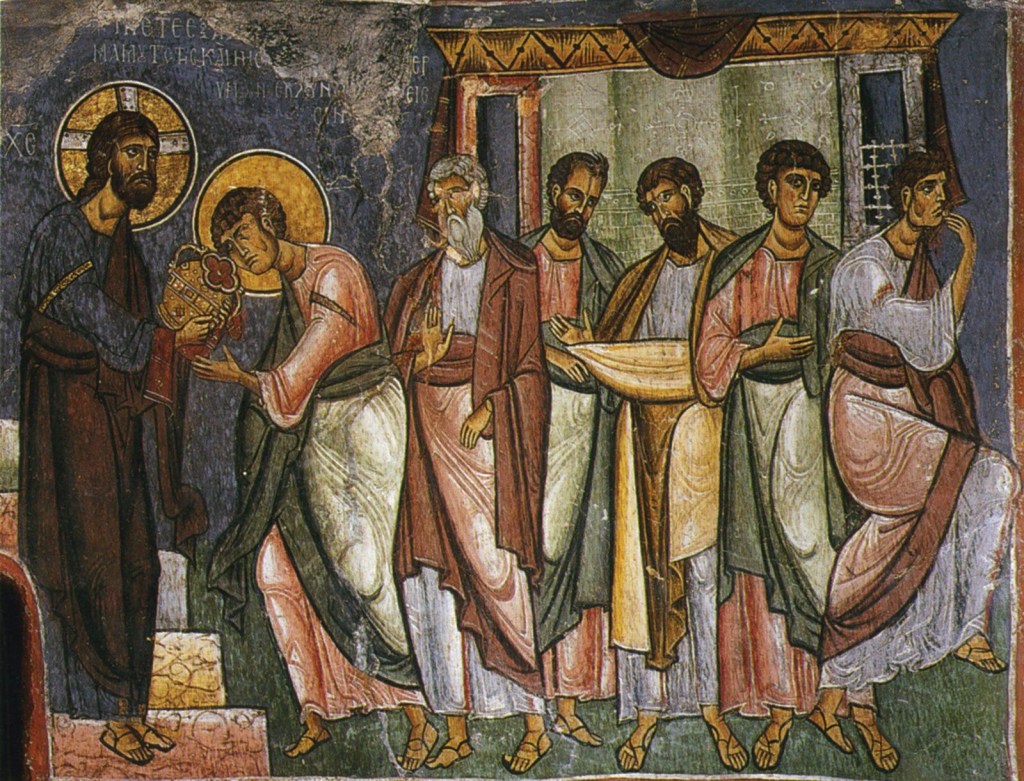
People come to All Saints from many places.
Some are exhausted by modern evangelicalism. Some are Roman Catholic but unsettled. Some attend mainline Protestant churches and feel increasingly out of place. Others have no specific church background at all but sense a hunger for something older, deeper, and more solid.
This page is meant to answer first questions, not everything. Think of it as a set of on‑ramps—places to begin, depending on where you are coming from.
You don’t need to agree with us yet. You don’t need to understand everything. You only need to be curious.

“I’m Baptist or non‑denominational, but I’m drawn to liturgy and the ancient faith.”
If this is you, you may feel torn.
You were taught to love Jesus, read the Bible seriously, and value personal faith. At the same time, you may now feel worn out by:
- Entertainment‑driven worship
- Churches that feel more like brands than families
- Sermons that sound like self‑help talks
- A sense that Christianity seems historically thin
Points of Connection
We share your love for Scripture. Lutherans confess that the Bible is the inspired, inerrant Word of God and the final authority for the Church. The historic liturgy is saturated with Scripture—psalms, readings, prayers, and hymns drawn directly from the Bible.
The liturgy isn’t a replacement for the Bible—it’s shaped by it. Rather than asking, “What will work this week?” the Church receives a form of worship that has grown organically from Scripture and the life of the early Church.
Worship is about what God gives, not what we offer. In much of modern evangelicalism, worship subtly shifts toward our emotions, decisions, and commitments. Historic Christian worship centers on God serving us with forgiveness, life, and salvation through Word and Sacrament.
Common First Questions
- Why do Lutherans baptize infants? Because Baptism is not primarily our work for God, but God’s work for us—a gift that gives forgiveness, new birth, and faith (Acts 2:38–39; Colossians 2:11–12).
- Why do Lutherans believe Christ’s Body and Blood are really present in Communion? Because Jesus says, “This is my body… this is my blood,” and the Church has confessed this plainly from the beginning.
You don’t need to understand or accept all of this right away. Many of us didn’t.

“I’m Roman Catholic, but I’m longing for something more biblical and Gospel‑centered.”
If you are Catholic, you may already love and appreciate:
- Historic liturgy
- Reverent worship
- Sacraments
- The Church’s continuity through time
And yet, you may also feel weighed down by:
- A lack of assurance
- Confusion about grace, merit, and salvation
- Teachings that seem to obscure the Gospel rather than clarify it
Points of Connection
Lutherans are catholic—but also evangelical. We retain the historic liturgy, church calendar, creeds, vestments, and sacramental life of the Church.
But we confess clearly that sinners are justified by grace alone, through faith alone, for the sake of Christ alone—not by works, merit, or cooperation.
The Gospel is not advice; it is a promise. It is the delivering of Christ. At All Saints, forgiveness is not assumed vaguely—it is spoken concretely in absolution, preached clearly in sermons, and delivered bodily in the Sacraments.
Scripture governs doctrine. We gladly receive the Church’s tradition, but only as it serves and agrees with the clear Word of God.
Common First Questions
- Is Lutheranism just a protest against Rome? No. The Lutheran Reformation sought to reform, not reinvent, the Church—by restoring the Gospel to the center.
- Do Lutherans still believe in the Real Presence? Yes. We confess without hesitation that Christ truly gives His Body and Blood in the Blessed Sacrament of Holy Communion.
“I attend a mainline Protestant church, but I’m theologically conservative. Is All Saints for me?”
Many who come from Methodist, Episcopal, Presbyterian (PCUSA), or similar backgrounds feel increasingly displaced.
You may love liturgy, structure, and tradition—but feel alienated by:
- Theological drift
- Moral confusion
- Scripture being treated as optional or symbolic
- The loss of doctrinal clarity
Points of Connection
All Saints is confessionally Lutheran. This means we are not guided by cultural trends, denominational politics, or shifting social norms. Our doctrine is publicly confessed, historically grounded, and accountable to Scripture.
We hold historic Christian teaching without apology. On Scripture, sin, marriage, salvation, and the person of Christ, we confess what the Church has always confessed.
Liturgy here is not aesthetic—it is theological. What we sing, pray, and confess shapes what we believe.
Common First Questions
- Is this like the Episcopal Church? There may be outward similarities, but the theology is very different. At All Saints, doctrine is not flexible or negotiable.
- Will I be pressured politically or socially? No. Our focus is the forgiveness of sins and faith in Christ.
“I don’t fit neatly into any of these categories.”
That’s okay.
Many people arrive simply knowing this:
- They long for the comfort of Christ
- They want historic Christianity
- They want reverent worship
- They want a church that takes doctrine seriously
- They desire a real parish community
You are welcome here.
 All Saints Lutheran Church and School