A Communion of Saints

A sermon for the Feast of All Saints, by Fr. Josh Leigeber.

What does it mean to be a “saint”? Not fundamentally someone in stained-glass, or someone who performed famous miracles — but simply this: one who is baptized into Christ. One born again of water and the Spirit. One united to the only Holy One — Jesus — whose righteousness is given as a gift.

In the Beatitudes, Jesus isn’t describing a list of spiritual heroes who managed to achieve a higher plane. He is describing the baptized — the poor in spirit, the meek, those who mourn, those who hunger for righteousness — all the ones who have learned the central cry of the Christian life: less of me and more of Christ. This is the life that Holy Baptism gives. In baptism the old Adam dies, and a new man rises in Christ. Baptism joins us to the death and resurrection of Jesus, and so, the blessings Jesus speaks actually belong to you now.

Because Christ alone is the righteous One, He is the Saint of all saints — and His holiness is given to His people in the Gospel and in the font. Therefore the beatitudes are not a ladder for you to climb; they are a description of the life you already receive from Jesus, by grace, as His child.

So on the Feast of All Saints we rejoice not only in those who have gone before — but that we, even now, truly share the same baptismal union with Christ. We are His saints — even down to the littlest baptized infant — awaiting with them the resurrection and the fullness of the kingdom of which we’ve already been made a part. Listen to the entire sermon below.
The God Who Raises the Dead

A sermon for the Sixteenth Sunday after Trinity, by Fr. Jerome Leckband.

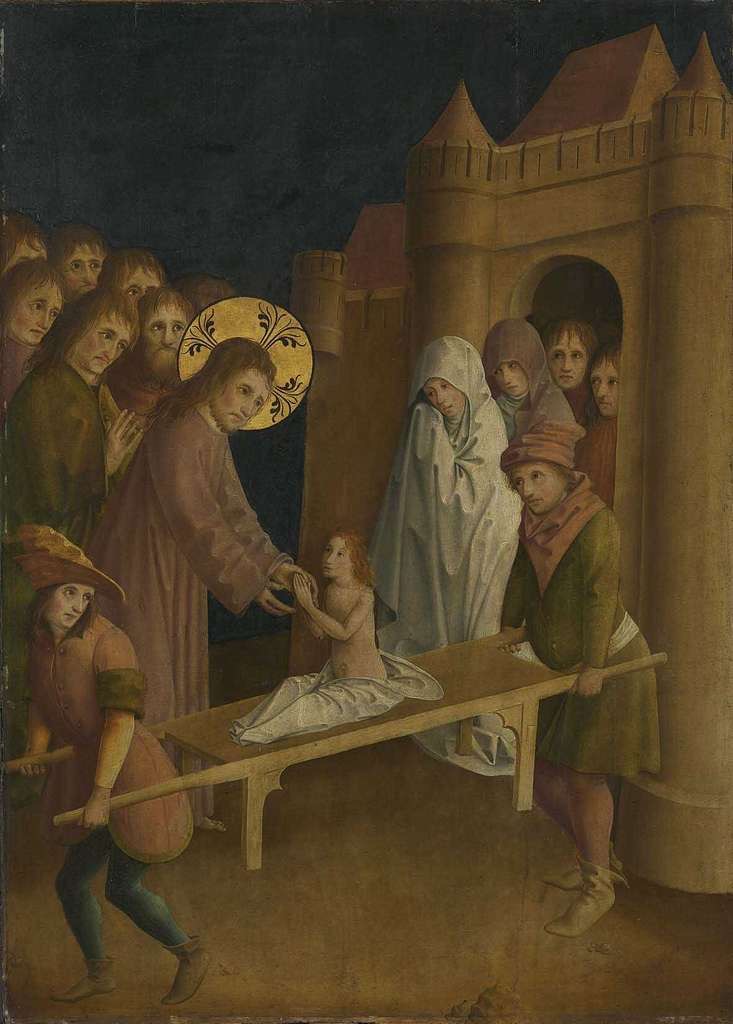
In Sunday’s Gospel, Jesus meets a funeral procession in the town of Nain and restores life to the dead son of a widowed mother. This account reveals the very heart of our Lord: He is the God of power, who can raise the dead; the God of compassion, who sees our grief and acts in mercy; and the God of grace, who comes to help us before we even ask.

Just as Jesus spoke life into the young man—“Young man, I say to you, arise”—so He speaks life into us. By nature we are spiritually dead in sin, but through His Word and Holy Baptism Christ raises us to new life with Him. We are united to His death and resurrection, forgiven, and made alive to live by faith in the Son of God.

This new life transforms how we face suffering and death. Even in trials, we trust that God’s love is at work, shaping our faith and fixing our eyes on the greater promise: eternal life with Christ. The miracle at Nain points us forward to the final resurrection, when Jesus will again speak the life-giving word and raise all the dead to be with Him forever. Until that day, we live in the comfort of His compassion, His victory over death, and His abiding presence with us. Listen to the whole sermon below.

Sinners Called by Christ

On the Feast of St. Matthew, Apostle and Evangelist (Sept. 21), Fr. Jerome Leckband reminded us that Matthew’s story is not one of a flawless saint but of a sinner called by Christ. Sitting at his tax booth, Matthew heard Jesus’ words, “Follow me,”—words that are spoken to every sinner, including us.

Matthew’s Gospel begins with a genealogy full of sinners, showing how God works through the broken to fulfill His promises. It also proclaims Jesus as Immanuel—God with us, a promise repeated at the Gospel’s end: “I am with you always, to the end of the age.”

Fr. Leckband reflected on Caravaggio’s painting The Calling of Saint Matthew, where the tax collector wrestles between clinging to his money and rising to follow Christ. This moment captures discipleship: leaving behind false masters to follow the true Lord. Following Jesus means daily dying to sin and rising with Him—a journey lived out in our vocations as spouses, parents, workers, citizens, and members of Christ’s Church.

Just as Matthew was called into a unique service as apostle and evangelist, we too are called to serve Christ where God has placed us. And through it all, Jesus remains God with us—in His Word, in Baptism, in the Supper, and in His Church—until He comes again. Listen to the entire sermon below.