Do we venerate the Body and Blood of Christ in the Eucharist?

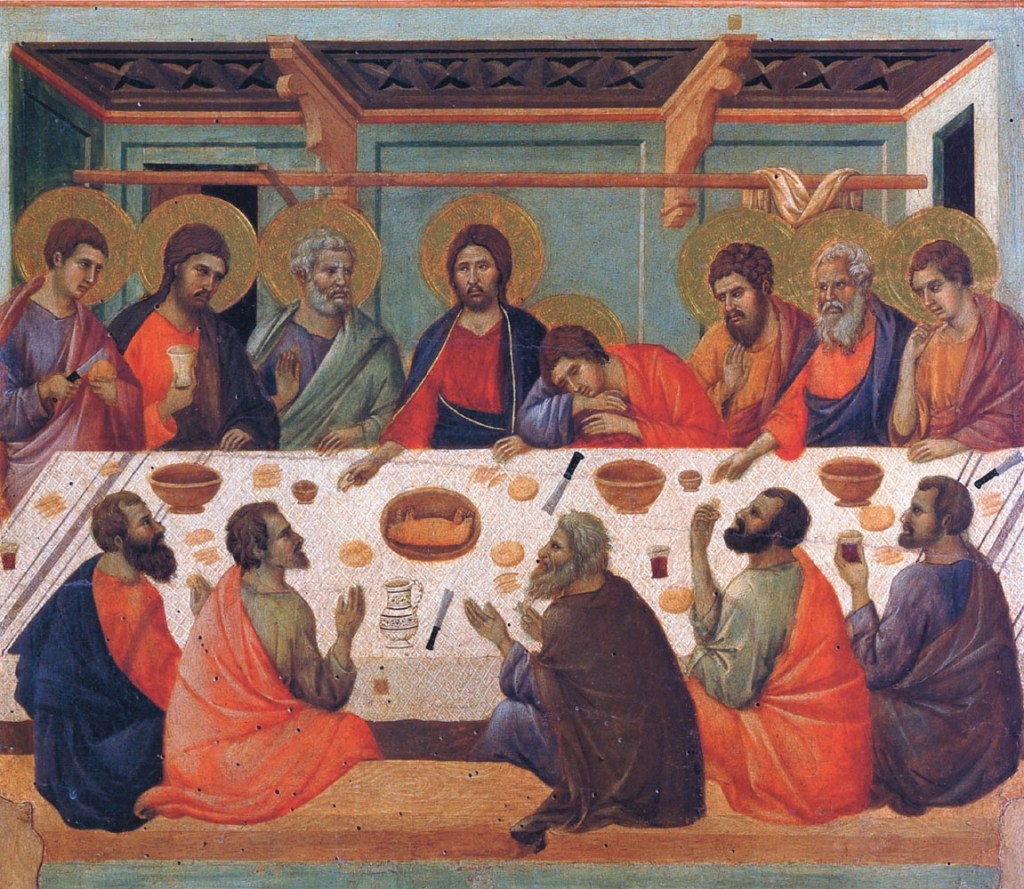
For about eight hundred years, the Church has dedicated the Thursday after Holy Trinity Day to be a feast day dedicated entirely to the Blessed Sacrament of the Eucharist. This past Thursday, then, was that feast day–the Feast of Corpus Christi, also known as the Feast of the Body and Blood of Christ.

In the Epistle from 1 Corinthians 11, we heard about Jesus’ institution of this holy supper and the words He has given through which He converts simple bread and wine into the Body and Blood of our Lord, and in the Gospel lesson, Jesus’ words from John 6, “He who eats My flesh and drinks My blood abides in Me, and I in him.”

But it was, especially, the traditional collect (prayer) of the day that focused our contemplation on this miraculous gift. We prayed:

O God, who under this wondrous Sacrament hast left us a memorial of Thy Passion: grant us, we beseech Thee, so to venerate the sacred mysteries of Thy Body and Blood, that we may ever have in ourselves the fruit of the redemption which Thou hast wrought; who with the Father and the Holy Ghost livest and reignest, ever one God, world without end.

Do Lutherans venerate and adore the Body and Blood of Christ in the Eucharist? For many American Lutherans and other Protestants, that may sound more than a little bit strange. But if Christ says that the bread and wine of the Sacrament are actually His true Body and Blood, is it strange? Or simply Christian? Listen to Father Leigeber’s sermon below for more.

Marriage: A Living Picture of the Gospel

Last evening, June 13, 2025, Allison Sterling and David Scarborough were united in holy matrimony at All Saints Parish. Their wedding was a joyous celebration of God’s good gift of marriage—but more than that, it was a living confession of something sacred, something eternal.

Allison and David chose yesterday as the date for their wedding, in part, because it was the five hundredth anniversary of the wedding of Martin and Katie. Five hundred years ago to the day, Martin Luther married his beloved Katharina von Bora—His “dear rib,” as he affectionately called her. Their union was not just personal; it was theological—a declaration that holy marriage, far from being a worldly formality, is a gift from God and a holy calling. Allison and David’s wedding was a continuation of that same confession: marriage is very good.

When God created man, He said, “It is not good that the man should be alone.” So He made a helper fit for him. He brought Eve to Adam, and He gave her to him. And now, just as Allison’s father has given her to David, so God unites wives to husbands within this holy estate. But even in the Garden of Eden, marriage was never just about Adam and Eve. It was always pointing forward to something greater, to a divine reality.

Saint Paul tells us that the union of husband and wife is a “great mystery”—in Latin, a sacramentum—because it is an image of Christ and His Bride, the Church. Though Lutherans don’t generally refer to marriage as a sacrament in the same sense that Baptism, Absolution, or the Eucharist are sacraments, it is nevertheless a holy act of God and sacred mystery that proclaims the Gospel.

Holy marriage, when understood rightly and lived out according to God’s design, becomes a sort of sermon—an embodied proclamation of Christ’s love for His Church. The husband is called to love his wife as Christ loves the Church: sacrificially, tenderly, enduringly. The wife is called to honor and trust her husband as the Church submits to Christ: willingly, faithfully, and in love.

This kind of union is increasingly out of step with the world. Our culture often treats marriage as optional or temporary. Cohabitation has become common. Divorce is tragically frequent. Even the definition of marriage is being blurred. But Christian marriage stands as a holy resistance—a living witness to the enduring truth of God’s Word and the unchanging love of Christ.

And this is precisely why the devil hates marriage. Because he hates Christ. And anything that images Christ’s love and grace becomes a target. But through the Spirit’s strength, pious Christian couples like David and Allison are able to stand firm—not by their own power, but by the grace given them in Christ within the communion of His Church.

Marriage is good. It is good for husbands and wives. It is good for children and for society. But most of all, it is good because it proclaims Jesus. It reveals the love of the Bridegroom who laid down His life for His Bride. It tells the world that there is One who forgives, who redeems, and who remains faithful forever.

So we rejoice with David and Allison. We thank God for their union. And we pray that their marriage, together with every Christian marriage, may always reflect the holy mystery of the eternal union of Christ and His beloved Church.

To God alone be all glory. Amen.

Tues., May 27: Downtown Rogation Procession

A local, urban take on an ancient Christian tradition.

An “Urban Rogation Procession” for the entire Jonesboro community will be held Tuesday, May 27, beginning at 6:00pm, in downtown Jonesboro. The procession will begin in front of the Municipal Center (300 S Church St) and will continue through downtown, giving thanks to God for His blessings and asking for His continued blessing and care upon: hospitals and healthcare workers, the homeless and neglected, the unemployed, children and schools, commerce and industry, agriculture and the arts, and our city.

What are Rogation Days and what is an “Urban Rogation Procession”?

Very quickly after Jesus’ ascension into heaven on the fortieth day after Easter and His sending of the Holy Spirit at Pentecost, a Church calendar began to take form. Christians wanted to organize their lives around the life of Jesus, and so they began to observe annually days like Christmas (to celebrate Jesus’ birth), Epiphany (to celebrate the visit of the Magi to the infant Christ), Good Friday (to commemorate and give thanks for His crucifixion for our sins), Easter (to celebrate Jesus’ victory over sin and death in the resurrection), and so on. 

Quickly, days were also added to the calendar to commemorate other people and events that were especially important in the Church’s life—like the days on which various apostles were martyred, the Annunciation to the Blessed Virgin Mary, and others—including days dedicated to repentance and prayer. The Rogation Days fall into that final category.

For about fifteen hundred years now, these days of repentance and prayer have been historically observed on the Monday, Tuesday and Wednesday before the Feast of the Ascension of our Lord.  The name “Rogation” is derived from the Latin rogare, which means “to ask” or “to pray.”

According to tradition, Rogation Days were introduced into the Church’s calendar about the year 470 by Saint Mamertus, Bishop of Vienna, when the ripening crops were threatened by a volcano. Following that example, the primary focus of the Rogation Days has been that of asking for God’s blessings upon the fruits of the earth. Throughout most of history and around the world, there have been processions to fields and gardens on these days each spring, giving thanks to God for the ways He provides for our body and life and asking that He would bless the crops and give a bountiful harvest. 

Particularly in a modern urban context, many of the ways which God uses to bless us and take care of us in our bodies goes beyond just a successful crop of food. The “Urban Rogation Procession” is being held to thank God and pray for His blessing also upon the other ways He cares for our body and life in society, like the ways listed above. We will also pray for peace in the world, and many of the same prayers that were used in the first Rogation procession all the way back in the year 470 will also be prayed.

Please join us Rogation Tuesday for this local, urban take on an ancient Christian tradition. Sponsored by All Saints Lutheran Church (allsaintsjonesboro.org).