Tues., May 27: Downtown Rogation Procession

A local, urban take on an ancient Christian tradition.

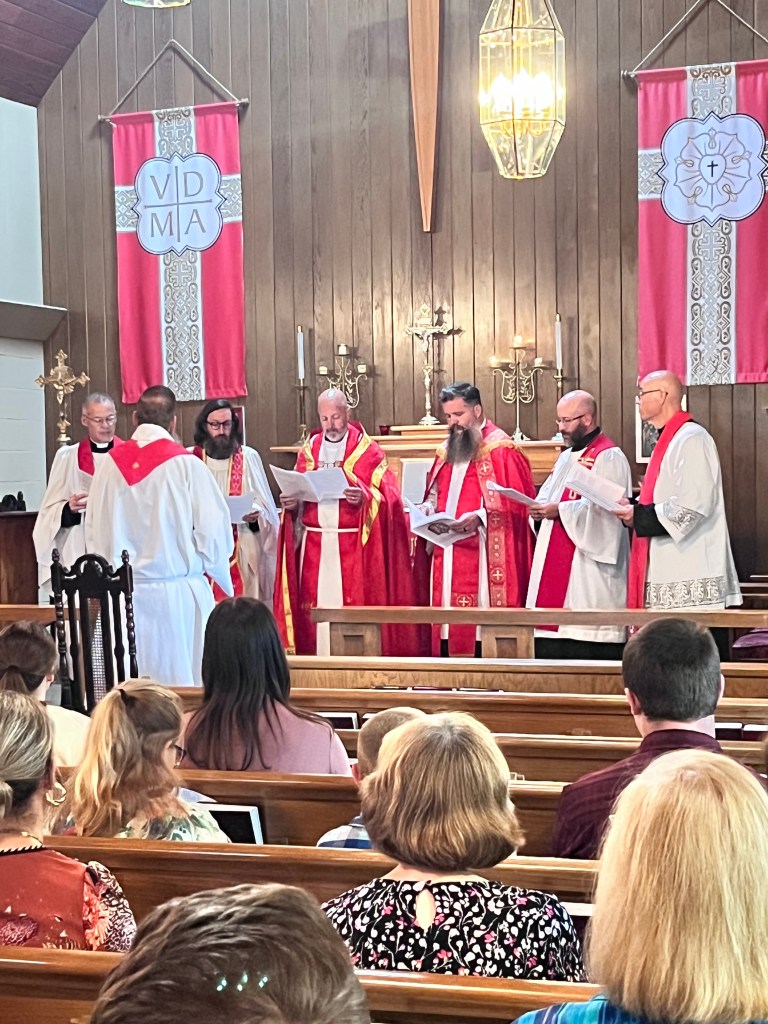
An “Urban Rogation Procession” for the entire Jonesboro community will be held Tuesday, May 27, beginning at 6:00pm, in downtown Jonesboro. The procession will begin in front of the Municipal Center (300 S Church St) and will continue through downtown, giving thanks to God for His blessings and asking for His continued blessing and care upon: hospitals and healthcare workers, the homeless and neglected, the unemployed, children and schools, commerce and industry, agriculture and the arts, and our city.

What are Rogation Days and what is an “Urban Rogation Procession”?

Very quickly after Jesus’ ascension into heaven on the fortieth day after Easter and His sending of the Holy Spirit at Pentecost, a Church calendar began to take form. Christians wanted to organize their lives around the life of Jesus, and so they began to observe annually days like Christmas (to celebrate Jesus’ birth), Epiphany (to celebrate the visit of the Magi to the infant Christ), Good Friday (to commemorate and give thanks for His crucifixion for our sins), Easter (to celebrate Jesus’ victory over sin and death in the resurrection), and so on. 

Quickly, days were also added to the calendar to commemorate other people and events that were especially important in the Church’s life—like the days on which various apostles were martyred, the Annunciation to the Blessed Virgin Mary, and others—including days dedicated to repentance and prayer. The Rogation Days fall into that final category.

For about fifteen hundred years now, these days of repentance and prayer have been historically observed on the Monday, Tuesday and Wednesday before the Feast of the Ascension of our Lord.  The name “Rogation” is derived from the Latin rogare, which means “to ask” or “to pray.”

According to tradition, Rogation Days were introduced into the Church’s calendar about the year 470 by Saint Mamertus, Bishop of Vienna, when the ripening crops were threatened by a volcano. Following that example, the primary focus of the Rogation Days has been that of asking for God’s blessings upon the fruits of the earth. Throughout most of history and around the world, there have been processions to fields and gardens on these days each spring, giving thanks to God for the ways He provides for our body and life and asking that He would bless the crops and give a bountiful harvest. 

Particularly in a modern urban context, many of the ways which God uses to bless us and take care of us in our bodies goes beyond just a successful crop of food. The “Urban Rogation Procession” is being held to thank God and pray for His blessing also upon the other ways He cares for our body and life in society, like the ways listed above. We will also pray for peace in the world, and many of the same prayers that were used in the first Rogation procession all the way back in the year 470 will also be prayed.

Please join us Rogation Tuesday for this local, urban take on an ancient Christian tradition. Sponsored by All Saints Lutheran Church (allsaintsjonesboro.org).

Homily for Good Friday

by Father Jerome Leckband

In Nomine + Jesu.

Behold, your servants: the chief priests and the scribes, Pontius Pilate and his soldiers, and all those who cried out “Crucify Him”. They do your work. Though you did not nail Jesus to the tree of the cross, you were by nature an enemy of God. Jesus suffered and died because of your sin.

But you are not solely to be blamed. No one takes Jesus’ life from Him by their brute force. You did not force Jesus by your very will. 

Jesus says, “My Father loves Me, because I lay down My life that I may take it again. No one takes it from Me, but I lay it down of Myself. I have power to lay it down, and I have power to take it again.”

No one forced Jesus to the cross. “I lay my life down of Myself,” Jesus says. “I have power to lay it down.” This is how Jesus’ power is shown; He makes His enemies His servants.

The chief priests and the scribes, Pontius Pilate and his soldiers, and all those who cried out “Crucify Him” – they served you, and they served God. Through them God’s will was done.

These servants crucified Jesus from a wicked will.

God used these servants to crucify His beloved Son out of His loving will. 

God is the One who formed your inward parts and knitted you together in your mother’s womb. Out of love for you, the Father sends Jesus to be your servant in order to redeem you.

Following Christ’s resurrection, on the Day of Pentecost, Peter terrified the Jews when he told them, “Let all the house of Israel know assuredly that God has made this Jesus, whom you crucified, both Lord and Christ.” Now when they heard this, they were cut to the heart.

To look upon Jesus on the cross and to know what He is doing there should cut you to the heart. When you view the nails piercing through Jesus’ hands, believe that those are you sinful works that inflict Him. Behold his crown of thorns, and believe that those thorns are your wicked thoughts. He was stricken, and smitten by God, and afflicted. He was wounded for your transgressions. He was bruised for your iniquities. The chastisement for your peace was upon Him.

Sons and daughters of God, don’t weep for Jesus. He had the power to take His life up again. Weep for yourselves, for your sin, and weep for your children who have inherited the original sin passed down through you.

Look upon Christ and hear how He speaks from His throne calmly and confidently, “It is finished. And bowing His head, He gave up His spirit.”

He bows His head in the sleep of death, but there is more that comes from Him. “One of the soldiers pierced His side with a spear, and immediately blood and water came out.”

St. Augustine recalls for us how God drew life from the side of the first Adam. When God put Adam to sleep, He obtained a rib from Adam’s side. From that rib, He formed the first woman. She was called the mother of all living. 

Jesus is the second Adam. On the cross He bowed His head in the sleep of death. From this sleeper’s side came blood and water that brings life to His bride, to His Church.  

Christ was born of the Virgin Mary, suffered under Pontius Pilate, was crucified, died and was buried. He has walked this valley of the shadow of death.

He is the One who joins Himself to you in water and blood. In the waters of Baptism, He births you from above – new life. With His blood He feeds and sustains you. He is the one who walks with you in the valley of the shadow of death. He walks with you in your suffering and in your death. 

Jesus has walked your way before. He has laid down His life and He has taken it up again.  This One who has power to take up His life again, takes you with Him through death to eternal life. 

IN+J

Why I Didn’t Become Catholic or Orthodox–and Found Something Better

by Jared Risner

Discovering the ancient church I didn’t know existed.

From a very early age, I couldn’t reconcile Sunday church services with what I read in Scripture. How could what we were participating in look so different from what I saw taught in the New Testament?

I was raised in church with Christian parents and good intentions, and for that I’m thankful. But something always felt missing.

As I got older, I began devouring the Bible, theological books, and the sermons of popular online pastors. I joined mission trips, served my community, and searched for Christ in all the ways I’d been taught to. Still, something inside me said, “This isn’t it.” I wondered if I was the only one who felt this way.

Early in my marriage, I began to feel the cracks in my evangelical experience become more like chasms. Worship felt like work, like it was centered more on my experience than God’s truth. Sermons often sounded like TED Talks, and Sunday services felt more like concerts. The liturgy of the early church was nowhere to be found.

Where were the creeds? The confessions? The connection to those taught by the Apostles—who were taught by Christ Himself?

I craved something deeper. Something older. Something rooted.

Like many others who leave contemporary evangelicalism, I assumed there were really only two options for historic Christianity: Roman Catholicism or Eastern Orthodoxy. After all, they had ancient liturgies, beautiful churches, and a clear connection to the early church.

But as I dug deeper, I ran into roadblocks.

I wasn’t comfortable with some of the teachings and practices—doctrines that seemed to go beyond Scripture, the idea of praying to saints, or placing tradition on par with the Word of God. And yet I couldn’t go back to the shallow end, either. I needed something more.

That’s when I discovered something I didn’t even know existed:
Confessional Lutheranism.


Ancient. Biblical. Centered on Christ.

At All Saints Lutheran Church in Jonesboro, I found the Church that still confesses the ancient creeds, celebrates the historic liturgy, and centers everything around the Gospel of Jesus Christ. I found the Church that:

• Preaches salvation by grace through faith—not works.

• Confesses the inerrancy of Scripture—not the shifting opinions of culture.

• Celebrates the Lord’s Supper as a true means of grace—not just a memorial.

• Prays ancient prayers, sings Psalms, and follows the liturgical calendar—not just trendy sermon series.

• Baptizes, catechizes, and actually believes what the Church has always taught.

In other words, it’s both ancient and evangelical in the best sense of the word. It’s the Church of the Reformation—deeply rooted in the early church, yet boldly centered on Christ and His Word.


Confessional Lutheranism: The Church You Didn’t Know You Were Looking For

If you’ve grown weary of church-as-performance…

If you’re hungry for reverence, structure, and theological clarity…

If you’re curious about the Church that still kneels, chants, and teaches from Scripture without compromise…

If you thought your only options were Roman Catholicism or Orthodoxy, but can’t imagine compromising the truths of the Word of God…

You’re not alone.

You may not have known it existed—but it does. And it’s here in Jonesboro.


Join Us This Sunday

📍 All Saints Lutheran Church

1812 Rains Street, Jonesboro, AR
🕙 Divine Service at 9:30 AM
☕ Coffee, fellowship, and Bible study after the service

At All Saints, we welcome seekers, wanderers, and those who love Jesus but are longing for more. You’re not alone in your search—and we’d love to walk with you.