
A homily for the Nativity of our Lord, by Fr. Josh Leigeber.
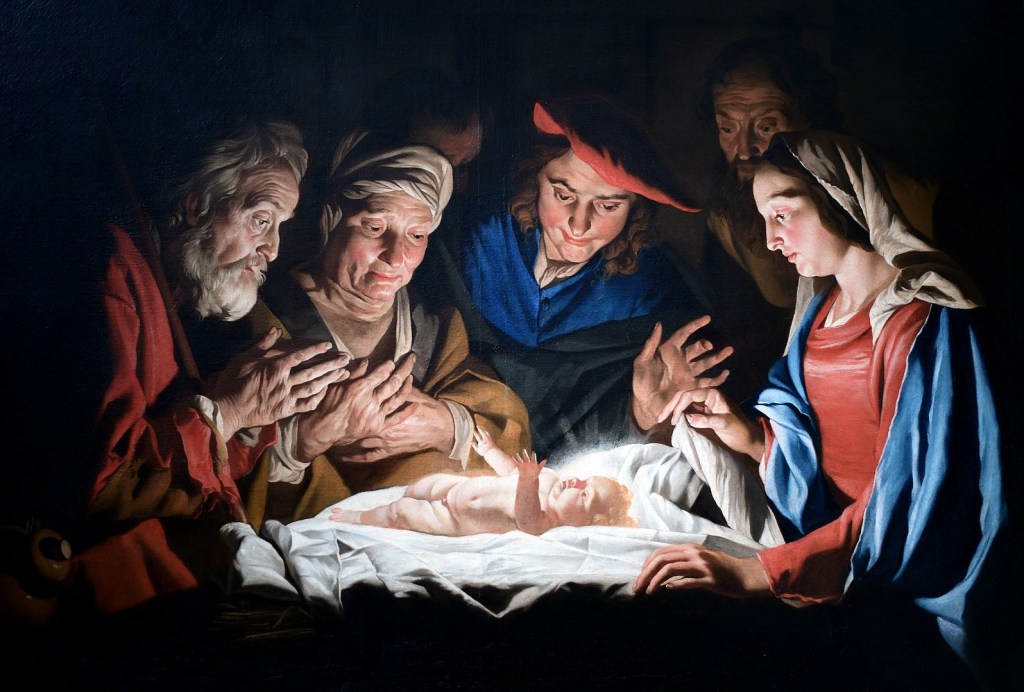
Humanity was created to live in the light and life of God, yet through the rejection of God’s Word fell into darkness—sin, death, and separation from the Creator. This darkness was not merely moral failure, but blindness, leaving mankind unable to see God or return to the light by its own effort. Though God never ceased to speak, sin clouded human understanding and left the world under the shadow of death.
Into this darkness, God acted in immeasurable love. The eternal Word of God, through whom all things were made, became flesh and entered the fallen world. The Light that first gave life to creation came not with earthly power, but in humility, born as a helpless child. In this hidden way, the Light broke into the darkness and overcame it from within.
In Christ is life, and that life is the light of men. By entering humanity’s darkness, Christ takes upon Himself the death caused by sin and gives in exchange His own light and life. What was lost in the fall begins to be restored as God dwells with man once more.
As Christ is born into the world, those born into darkness are given new birth through Him—born of God by water and the Spirit. The Light has come. Sin, death, and the devil are put to flight. In Christ alone is life, salvation, and the true light that enlightens the world. Listen to the full homily below.
 All Saints Lutheran Church and School