A sermon for the Second Sunday in Advent, by Fr. Josh Leigeber.
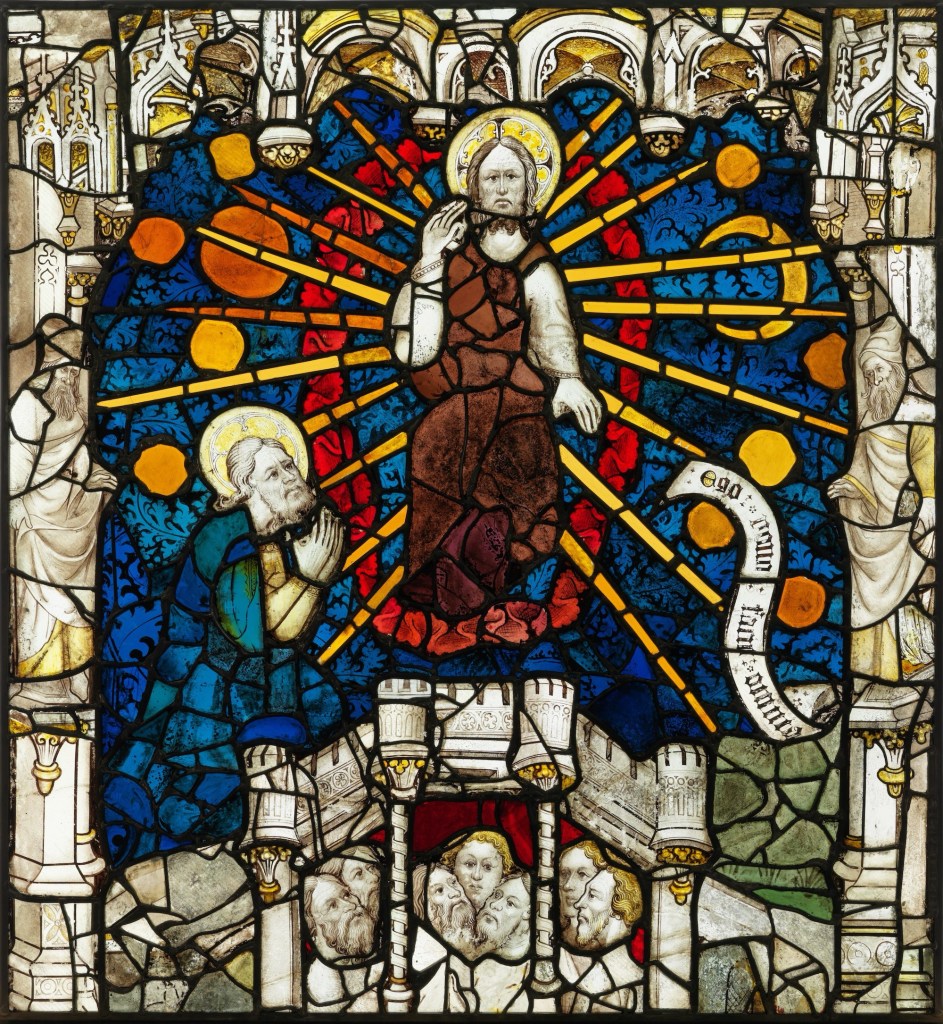
The New Heaven and the New Earth, from the Great East Window of York Minster, c. 1405-1408.
In a world that feels increasingly chaotic, discouraging, and disordered, it’s easy to find ourselves echoing the impatient cry, “Any time now, Lord.” But Scripture reminds us that God’s seeming slowness is actually divine patience—patience for our sake, that we might be drawn to repentance and prepared for Christ’s return.
In this Advent 2 sermon, we explore how God meets our impatience with His mercy, how He prepares our hearts through His Word and Sacraments, and how Christians can lift their heads with confidence even as the world trembles.
Listen to the full sermon below and be encouraged: Christ truly comes—now in grace, and soon in glory.
A sermon for the First Sunday in Advent, by Fr. Dan Suelzle.
The Entry into Jerusalem; Simon Bening (Flemish, about 1483 – 1561); c. 1525–1530; Tempera colors, gold paint, and gold leaf on parchment.
Our lives as Christians are marked by a tension between the sure grace of God that is ours now through baptism into Christ, and the “not yet” of Christ’s final, glorious return. Therefore the Christian life is one of perseverance. As we begin this new church year in the season of Advent, we are urged to wake from sleep, to cast off works of darkness, and to live with sober watchfulness against the threats of the world, the devil, and the flesh. Our strength and guidance for this ongoing battle—the “habitus” of the Christian life—do not come from self-effort, but flow from a faithful proximity to the gifts of Christ, in Word and Sacrament. It is through these means that God calls, equips with the armor of light, and transforms us, assuring us that our salvation is secure in Christ, whose glorious return on the last day is nearer now than when we first believed. Listen to the full sermon below.
A sermon for the Last Sunday of the Church Year, by Fr. Josh Leigeber.
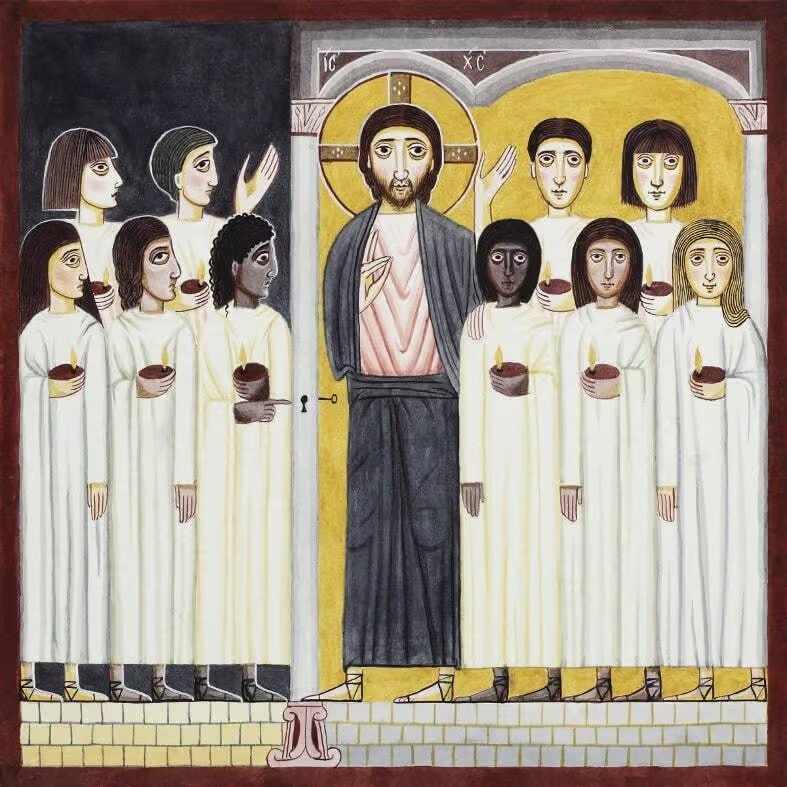
Parable of the Wise and Foolish Virgins, by Nicola Sarić.
This morning’s sermon proclaimed the heart of God toward His people: He desires to save. Scripture assures us that God’s thoughts toward us are “of peace and not of evil,” and that He has acted decisively in Christ to free us from captivity to sin, death, and the devil. Through Jesus’ suffering, death, and resurrection, our enemies are defeated, and we now have peace with our Father.
Because of this salvation, Christians look forward with eager joy to the Last Day—a day that will come suddenly, “like a thief in the night.” For those in Christ, it is not a day of wrath but of homecoming, reunion, and perfect joy.
Yet until that day arrives, Saint Paul urges the Church to “keep watch.” Though the enemies of God have been defeated, they still grasp and claw to drag believers back into darkness. God protects and strengthens us through His Word and Sacraments, and so we dare not grow complacent or take lightly the gifts He gives in the Divine Service. Here, God Himself guards, feeds, and sustains His children.
The Church’s prayer today echoes this call: that God would stir up our wills, deepen our desire for His gifts, and keep us steadfast in the light of Christ.
Christ will come soon. His thoughts toward you are peace. So remain in His light, keep watch, and look with joyful anticipation toward the glorious day of His appearing. Listen to the entire sermon below.


 All Saints Lutheran Church and School